
Aquaponic Systems for Oʻahu Homes and Schools
Designed, built, and maintained in Mililani — by the same team behind Wai Gardens.
Aquaponics grows food using the same nutrient cycle that runs Hawaiʻi’s loʻi fish feed plants, plants clean the water for the fish. We design and install backyard systems for Oʻahu families, turnkey systems for Hawaiʻi schools, and we keep them running with monthly or quarterly maintenance.
What is Aquaponics?
Aquaponics is hydroponics with fish. Fish live in a tank; their waste produces ammonia; bacteria in a biofilter convert that ammonia into nitrate; the nitrate-rich water feeds the plants; the plants pull the nutrients out and clean the water before it returns to the fish. It's a closed loop — almost no water goes out, no fertilizer goes in, and the fish are eventually edible too if you want them to be.
For most Oʻahu homes the practical advantages over plain hydroponics are three: you use 90% less water than a traditional in-ground garden, you grow more pounds of food per square foot, and the system mostly runs itself once it's cycled. The trade-off is one of complexity — there's a living animal in the loop, which means the build and the early weeks of cycling matter more than they would for a tower garden.
Systems we build on Oʻahu
Media-bed aquaponics Best for: backyards, classrooms, anyone learning. Plants grow in a bed of expanded clay pebbles. Easiest to maintain, most forgiving of fish-health swings.
Deep-water culture (raft) aquaponics Best for: leafy-green production, larger systems, café tie-ins. Plants float on rafts above a deep tank of nutrient-rich water. Highest yield per square foot.
IBC tote aquaponics Best for: budget-conscious builds, off-grid sites, classrooms wanting visible plumbing. We repurpose food-grade IBC totes into a fish tank + grow-bed combo. Compact, durable, easy to teach from.
Vertical / NFT-style aquaponics Best for: lānai installs, small kitchens, indoor classrooms. Hybrid hydro/aquaponic systems with a small fish loop feeding vertical NFT channels.
Fish species we work with
Fish that thrive in Oʻahu aquaponic systems
Hawaiʻi's climate is unusually friendly to several fish species; not all of them are legal to keep without a license, and some get aggressive in small tanks. Here's what we recommend by use case.
Tilapia Edible, fast-growing, hardy in Oʻahu temperatures, and the most-used aquaponic fish in Hawaiʻi. We typically stock Mozambique tilapia for residential systems. State permits required for some species — we handle the paperwork.
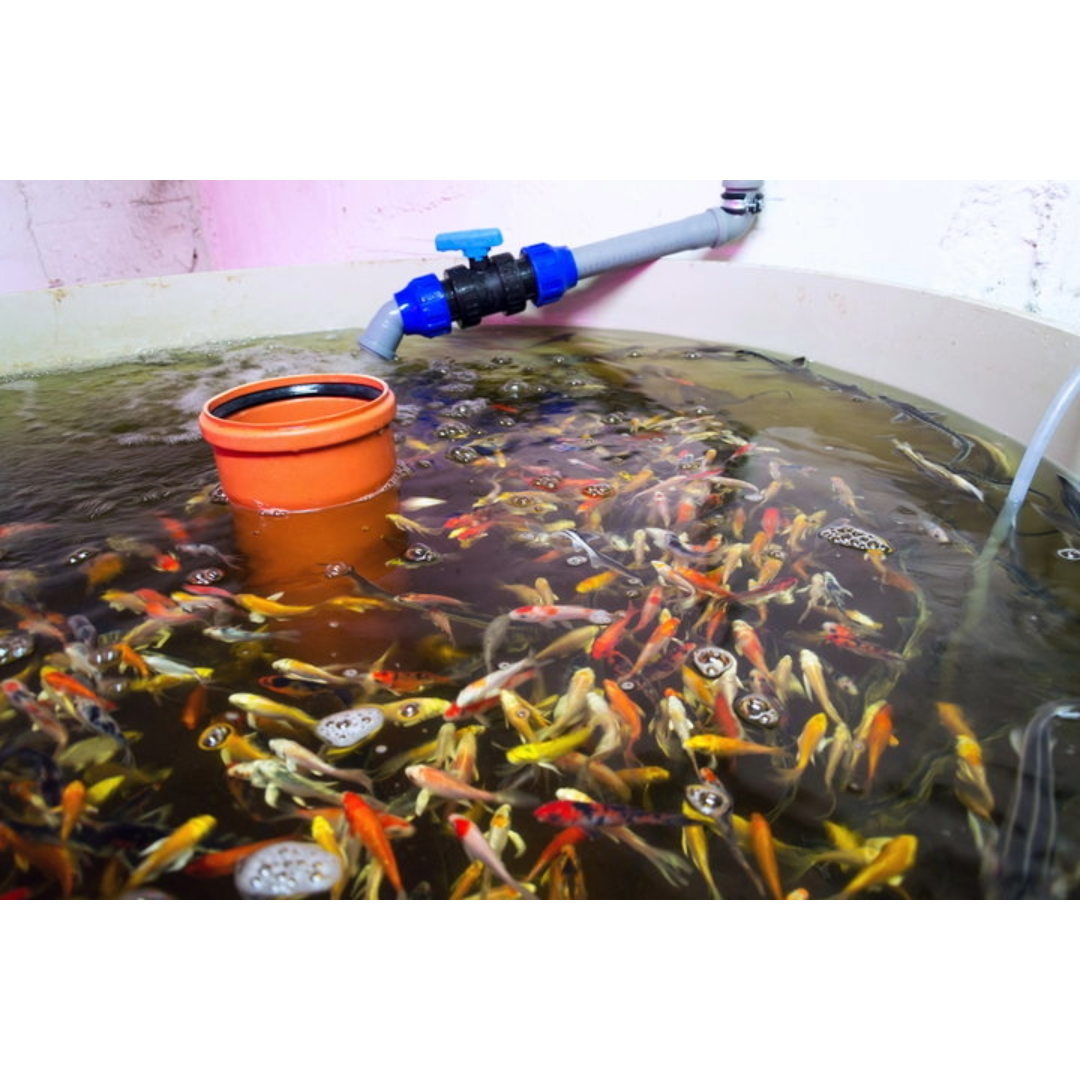
Koi & ornamental goldfish Best if you want the system to be as much a water-feature as a food source. Koi are long-lived (20+ years), beautiful, and don't get eaten — but they don't produce as much waste per pound as tilapia, so plant yields are lower.
Catfish (channel or sailfin) A good middle ground for larger systems. More cold-tolerant than tilapia (matters for Mililani winter nights), and edible when grown to size.
The Building Process
How we build your system
1. Free site assessment We come to your home or school, look at sun exposure, water access, electrical capacity, and structural support. 60 minutes, no charge, no pressure.
2. System design You get a written proposal: system type, size, fish species, plant capacity, installation timeline, total cost, and recurring-maintenance options. Usually within five business days of the site visit.
3. Build day(s) For a residential system, install is typically 1–2 days on site. For school systems we coordinate with your facilities team and schedule around the calendar.
4. Cycling & first plants After the system is built, we cycle the biofilter for 4–6 weeks before adding fish. We come back to test water chemistry, add the first fish and plants, and walk you through daily checks.
5. Ongoing maintenance Monthly or quarterly visits to check pH, ammonia, nitrite, nitrate, dissolved oxygen, biofilter health, plumbing, and fish well-being. Most issues are caught and fixed before you'd notice them.
Aquaponics in Hawaiʻi classrooms
Schools are why we built this service. An aquaponic system in a classroom teaches the nitrogen cycle, water chemistry, biology, ecology, and food sovereignty — all from one system on one wheeled cart. We design Pre-K through 12th-grade systems that fit existing classrooms, and we supply the curriculum your teachers can pick up and run with.
Curriculum aligned to Hawaiʻi DOE standards (NGSS, ʻāina-based learning)
Teacher training included with every install
Funding guidance — DOE STEM grants, USDA Farm-to-School, Kamehameha community grants
Optional in-classroom workshops led by our team
Frequently Asked Questions
-
Hydroponics uses a nutrient solution you mix and add. Aquaponics uses fish waste as the nutrient source. Hydroponics is simpler and more controllable; aquaponics is closed-loop, more sustainable, and grows protein alongside vegetables. Many of our clients run both.
-
Getting started is simple. Reach out through our contact form or schedule a call—we’ll walk you through the next steps and answer any questions along the way.
-
Most home systems need a 30-minute health check every 2–4 weeks and a deeper clean every 3–6 months. We offer maintenance plans so you don't have to track it yourself.
-
Yes — for tilapia and catfish, that's the point. For koi and ornamentals, no. We talk through which fits your goals during the site assessment.
-
A typical residential system runs a small water pump and an air pump 24/7. Real-world cost on Oʻahu is roughly $20–$40/month, depending on system size and HECO tier.
-
We replace fish lost during the warranty period at no charge if the cause is design-related. After the warranty, replacement is at cost. The maintenance plan exists in part to catch the small issues that lead to fish loss before they happen.
-
You can reach us anytime via our contact page or email. We aim to respond quickly—usually within one business day.
-
We design with backup-air solutions for systems where fish loss would be a real problem (especially schools and koi systems). Battery backups, UPS units, or manual aeration plans depending on your site.
-
Tilapia in private aquaponic systems generally don't require a permit, but some species and any commercial operation do. We help you navigate the DLNR aquaculture rules and handle the paperwork as part of your build.
-
Leafy greens (lettuce, kale, swiss chard, bok choy), most herbs (basil, mint, cilantro, parsley), and many fruiting plants (tomatoes, peppers, cucumber). Root vegetables are harder. We pick the plant mix to match your fish load and your kitchen.
-
Yes. We're based in Mililani and serve every part of the island — Wahiawā, Waipiʻo, Pearl City, Honolulu, Kailua, Kāneʻohe, the North Shore, and the Leeward side.
-
First leafy-green harvest is typically 30–45 days after the system is cycled and planted. Herbs follow shortly after. Fruiting plants and tilapia harvest take longer (6–9 months).
-
Yes — we do "rescue" maintenance plans for backyard systems built by previous installers or DIY'd. We come out, audit the build, fix what needs fixing, and put you on a regular maintenance schedule.